|
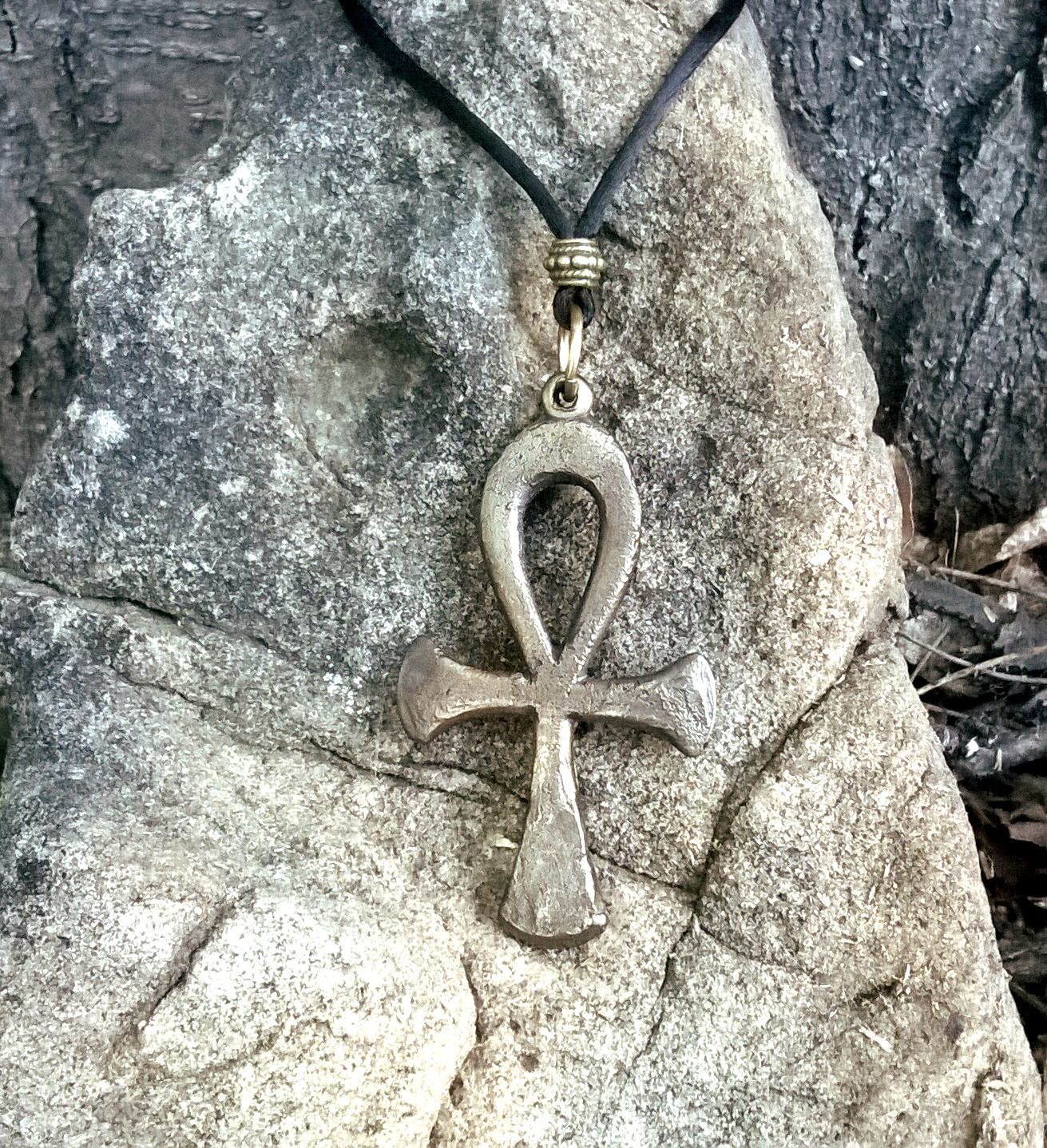
Large Ankh
The most popular and enigmatic of Egyptian symbols, it holds a sacred
place among Coptic Christians as a symbol of the eternal life to be found
in Jesus Christ. Its earliest use is found among the Pyramid texts dating
back to 2400bce. Since that time it was found in the hands or proximity of
every depiction of every major Egyptian deity and pharaoh. Many theories
have been postulated as to it's meaning but the most plausible is given by
Egyptologist Alan Gardiner who interpreted it as a phonetic symbol for the
Egyptian word ˁnḫ
"live", a triliteral root probably pronounced
/ʕánax/
in Old and Middle Egyptian. It is therefore a symbol which represents the
breath of life, creation, resurrection, and eternity. |